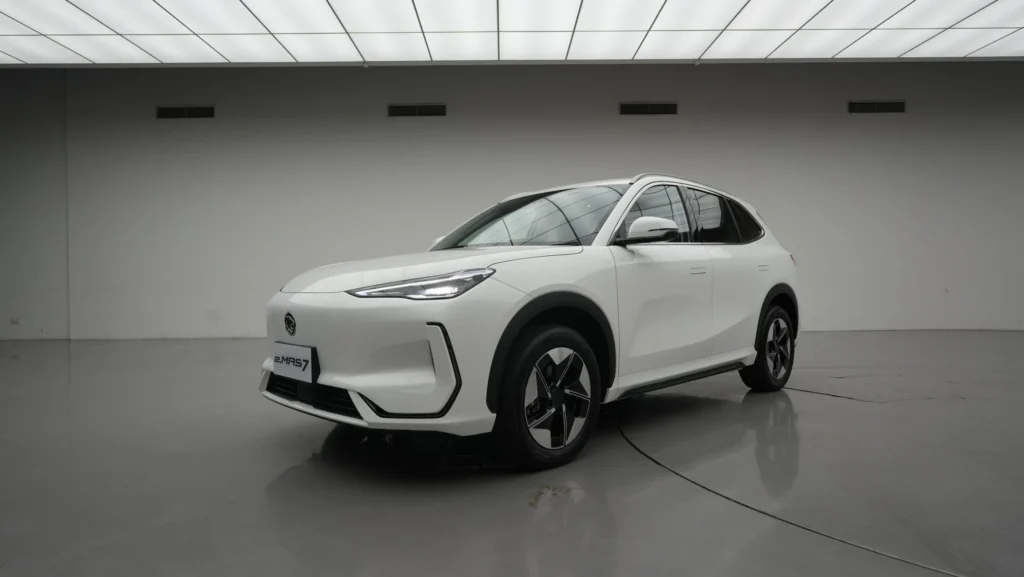
This Proton eMAS 7 review comes from my daily use for over six months in Malaysia. I drive the 2025 Premium variant in Lithium White. My weekly driving distance is around 250 to 300 km and the mix is 75% city and 25% highway driving. I usually set the AC to 24°C on Auto, and have rarely driven it in the heavy rain. The odometer currently reads 5,671 km as I write this. These are my roads, my costs, and my notes. I hope this helps if you plan to buy, or if you want to know what the car feels like after the first glow fades.
Settling in: what the first months revealed
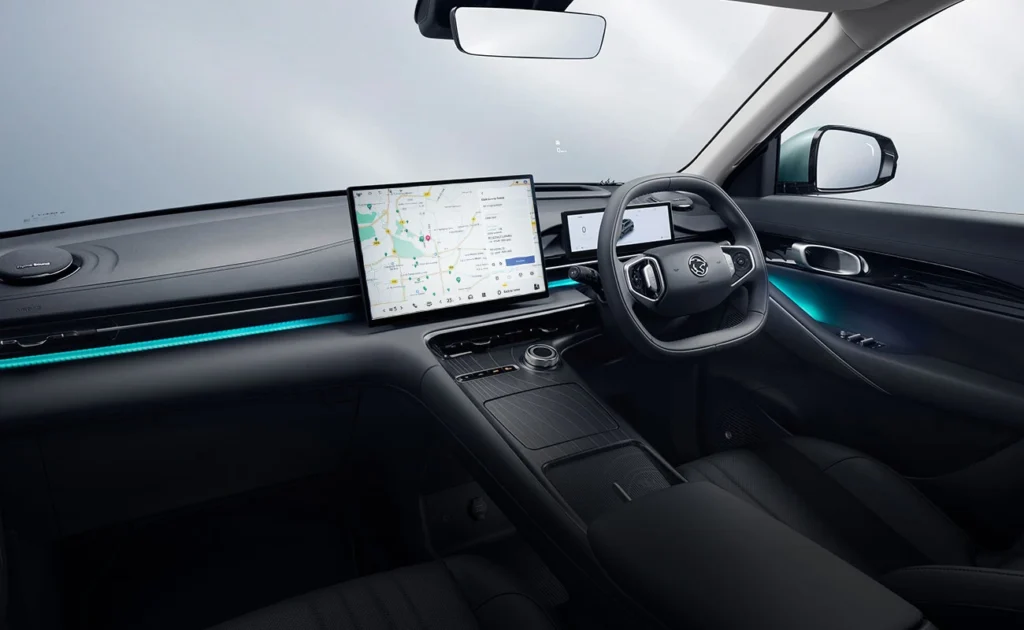
The first impression came from how easy the car is to live with. The driving position falls into place without fuss, the steering wheel adjusts to a natural reach, and the head-up display puts speed and guidance where your eyes expect them to be. The cabin looks modern, yet it remains tidy enough that you find the basics without digging through submenus. From the start, the rear seat space stood out. Friends and family notice the knee room, the flat floor, and the simple way child seats slot into the Isofix points. Small details like wide-opening rear doors matter on school runs and quick grocery stops, and this car gets those details right.
Ride quality sits on the soft side, which suits slow city streets and the patched sections that every Malaysian driver knows well. Over long waves the body can bounce before it settles, a trait you notice on certain flyovers and undulating lanes. It is not harsh or noisy, but it tells you the suspension tune favors comfort first. Wind noise at 110 km/h stays low enough that you can talk in a normal tone, and the cabin remains calm even when trucks pass in the next lane. If you prefer a firmer, more tied-down feel, plan a test loop that includes your roughest roads, then decide if this balance suits you.
Screens, software, and the features that matter
The main screen wakes quickly and responds without lag, which makes the car feel ready as soon as you pull away. Menus are straightforward after a short learning period, and most frequently used functions sit near the surface. I rely on the heads-up display (HUD) every day because it keeps my eyes on the road and reduces glances down to the cluster. Bluetooth pairing holds a steady link, calls sound clear, and media controls behave as they should.
One gap remains. As of September 2025, Android Auto is still not available on my unit. The native navigation works, yet phone mirroring would make maps, music, and messages simpler for many drivers. There is also a small irritation in how preferences behave. Drive and safety settings do not always stick between trips. I often reselect Auto regen, then nudge certain alerts down a level. These are quick steps, but small steps add up in daily use. A software update that saves profiles with deeper preference memory would solve most of this.
Real-world efficiency and range
Across six months the lifetime average sits at 14 kWh per 100 km. That figure settled after the first few weeks and has stayed stable since. My best recorded trip came from a slow day in the city, a 30 km loop at an average of 24 km/h in dry weather. The trip computer showed 12 kWh per 100 km, which lines up with the pattern you see in many EVs on gentle stop-and-go routes where regen and smooth inputs pay off.
Range depends on route and speed, so I tracked both. In the city, from 100 percent down to 10 percent, I see about 330 km on a typical week. On the highway at 90 to 110 km/h, my numbers hover near 340 km. That highway figure may surprise you, since higher speeds usually push consumption up. Two factors help here. First, my highway runs are short, so the car spends less time at very high aerodynamic loads. Second, traffic flow often sits near the lower end of the 90 to 110 km/h band, which trims the penalty from air drag. Keep tyre pressures on spec, use light throttle inputs, and let the regen do its work as you plan your lifts; the car rewards that style with consistent consumption.
I run the climate control at 24°C on Auto most days. In this range the system cools the cabin without big swings in energy use, and the thermal management keeps the pack happy in our heat. I have not had many prolonged rain days to test wet-weather penalties in detail, though short showers did not move the needle.
Charging at home and on the road
Home charging is the backbone of my routine. I use the Proton-supplied 7 kW wallbox, and my TNB rate sits at RM0.45 per kWh. On a normal week I plug in a few evenings, adding roughly six hours of AC charge time in total. At my lifetime consumption, a home 100 km costs 14 kWh × RM0.45 = RM6.30. That number is the reason many owners say an EV changes the rhythm of their budget. Small top-ups keep the battery in the comfortable middle of its state-of-charge band, and the car is always ready the next morning.
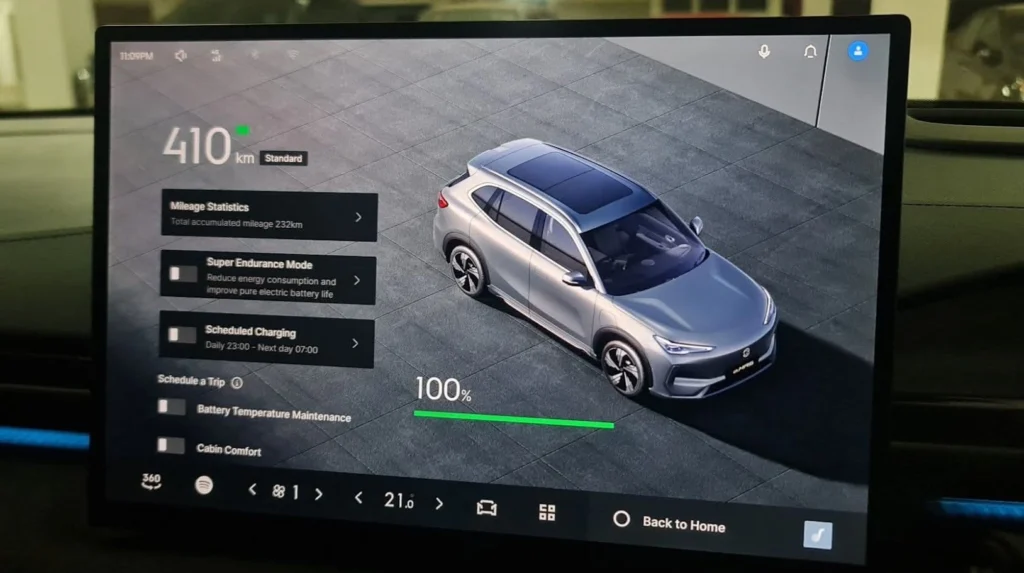
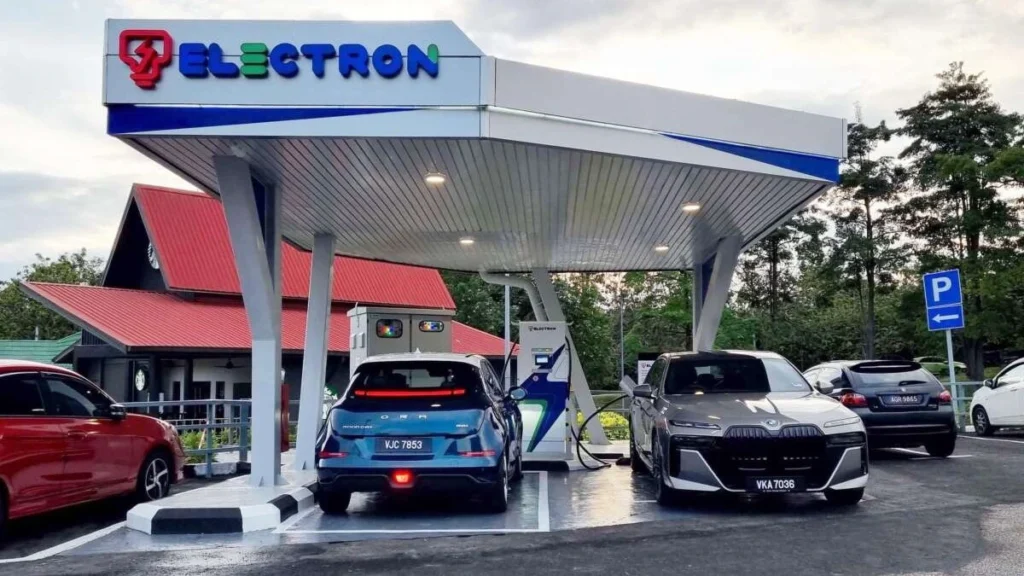
Public fast charging fills a different role. I use Gentari and JomCharge when I string a few towns together or when an unexpected trip pops up. The eMAS 7 tends to peak near 120 kW on a warm pack, then it tapers in clean steps. A 10 to 80 percent stop takes about 30 minutes, which fits a bathroom break and a quick drink. At RM1.60 per kWh, a DC-charged 100 km costs RM22.40 using my lifetime consumption. The gap between home and DC prices is clear, so I plan my week around the wallbox and save highway sessions for the trips that need them.
Queues have not been a regular issue on my routes, probably because I avoid peak weekend windows and pick sites with several bays. Payments have worked without drama, and I keep both apps updated. If you are new to public charging, set up your accounts before you need them, check station status in the app, and give yourself a backup location within a short detour. Those habits remove most of the stress that people associate with first-time DC stops.
How it drives when you stop timing it
Performance in the daily sense is about response and control more than figures on a page. In town, the eMAS 7 pulls away cleanly and threads through gaps with a measured push with its 160kW (218 PS) motor and 320 Nm of torque. The mapping keeps throttle inputs smooth, and Comfort mode suits almost every situation. Sport sharpens the first part of the pedal, useful for short slip roads and quick lane changes, yet the car remains tuned for calm progress rather than sharp edges. Braking blends regen and friction in a way that feels natural after a day or two; you stop where you expect to, and the pedal does not surprise you with sudden grabs.
The soft spring and damper setup does most of its best work between 30 and 80 km/h, which covers the bulk of Malaysian city use. It is forgiving over broken seams, speed humps, and the criss-cross of patched asphalt near junctions. Take a series of long undulations at speed and the body will rise and fall before it finds level, so if you like the tied-down feel of a sportier tune, set that expectation before the test drive. For family use, the comfort bias pays off more often than it frustrates.
Interior and everyday practicality
You sit a little higher than in a traditional hatchback, which gives a clear view over traffic without the bulk of a large SUV. The screen spans the dash without feeling like a wall, and the software avoids clutter. Storage is sensible. The door bins take bottles, the center console swallows a phone and a wallet, and the boot floor lies flat enough for grocery runs and folded strollers. The absence of a front boot storage bin remains a miss in daily use, because a small compartment under the bonnet would keep charging gear away from the clean boot space.
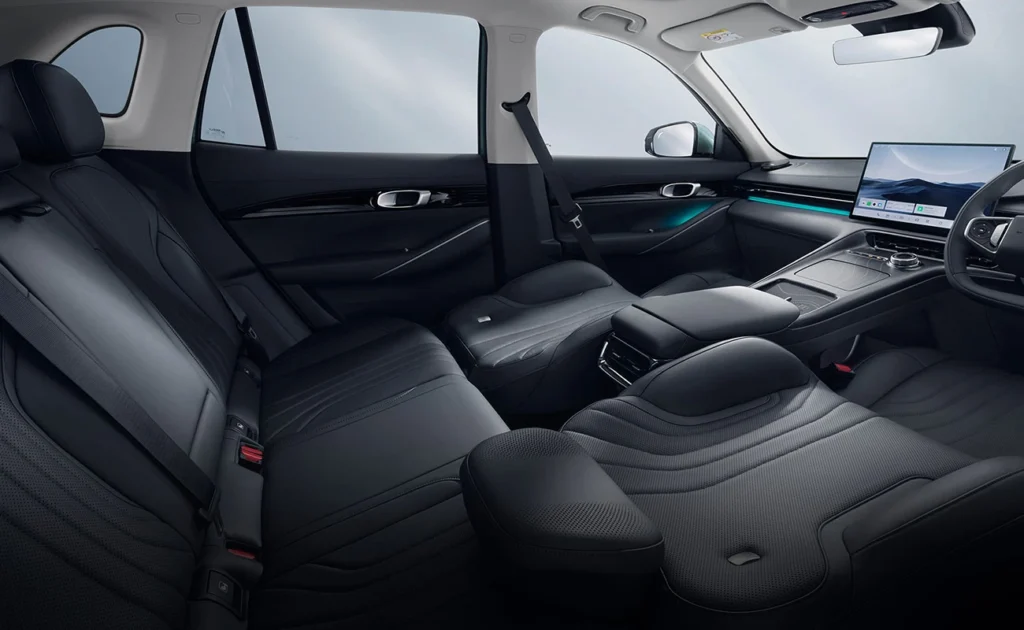
Material quality matches the price point. Panels line up, textures avoid the shiny look that can cheapen a cabin, and after six months there are no squeaks or rattles in my car. The seat frames feel solid, and after a two-hour stretch, my back and shoulders felt as fresh as they did at the start. On hot days the ventilated fronts keep you comfortable. That one feature alone changes how the car feels at 3 p.m. in a mall car park.
Tech, infotainment, and the small gaps that remain
In daily use the HUD is the star, because it reduces eye movement and keeps the speed and basic guidance always in view. The main 15.4 inch 2.5K infotainment display is quick and clear, and the layout makes sense. The built-in nav is fine for simple routes. I still prefer Google Maps for traffic and search, which is why the lack of Android Auto stands out more than any other tech gap. If Proton enables it in a future update, the experience takes a clear step forward. This is update is expected to arrive in Q4 this year, so hopefully this solves this pain point.
A second gap sits in the way settings persist. Regen and certain safety alerts do not always stay where I leave them. Each restart brings a short ritual of setting Auto regen and trimming the warning volume. None of these steps take long, and they do not spoil a trip, yet they chip at the feeling that the car knows your preferences. Saving a richer profile would resolve this and would make the car feel more personal.
Safety and ADAS: where they help, where you still lead
Adaptive cruise control works well on clean highways and on newer sections with crisp lane markings. The car keeps a steady gap, brakes smoothly for clusters of slower traffic, and resumes without lurching. Lane keep pairs with that behavior and helps keep you centered. On older roads with faint paint, the system asks for more steering input, which is a nudge to drive rather than rely on automation. In dense urban traffic with motorcycles filtering through tight spaces, the system can react early to small cuts, so I often take control before it needs to decide. Use the tools where they add value, and hand drive where traffic is complex; that approach keeps stress low.
The car’s safety chimes tell a different story. Some alerts sound louder than they need to in a quiet cabin, and right now you cannot switch all of them off. I would like deeper control over volume and trigger levels, because a feature that protects you should still feel like a partner rather than a hall monitor. I expect this is a software choice, so there is room for improvement without hardware changes.
Reliability and service so far
Six months in, there have been no faults to fix and no parts to wait for. The software has not crashed, the screens have not frozen, and there are no rattles from the interior. That stability builds trust in the car. If something changes I will update this view, but the early record is clean.
What it costs to run, with real numbers
I drive roughly 1,000 km per month. At 14 kWh per 100 km, that points to 140 kWh for traction energy. I round up to 167 kWh per month to cover charging overhead and the occasional longer route. At RM0.45 per kWh, home electricity comes to about RM75 per month, or near RM450 for six months. On the public side, I take a road trip about once every two months and add 40 kWh at a DC station each time. At RM1.60 per kWh, that is RM64 per session, or RM192 across six months.
Add those figures together and total energy spend sits in the RM570 to RM642 band for the period, depending on how you split home and DC use. Insurance cost me about RM4,000 with no NCD, and there is no EV road tax yet. Routine service has not added to the bill so far. The only extras were a cable bag, a phone mount, and floor mats, which are personal choices rather than required items.
What I like after half a year
The strongest points line up with how most people use a family EV in Malaysia. Value comes first. The car gives you space, a full safety suite, a large screen, and a calm drive for a price that still looks sharp in 2025. The rear seat is generous, which makes daily life with kids easier. The front seats stay supportive on long days, and the ventilation turns hot afternoons into regular ones. The HUD improves focus in a simple, reliable way. Performance is more than numbers here; it is the ability to slip into a gap, merge onto a highway, and pass slower traffic without strain. The eMAS 7 does that without drama, which is all most drivers ask for on a Tuesday.
What needs work
A few software decisions hold the car back. Some safety chimes are louder than they need to be, and you cannot fully control them. Android Auto is still not available on my unit as of September 2025, which removes a feature that many drivers expect as standard. Drive and safety preferences do not always save between trips, so you repeat small steps more often than you should. Hardware brings two more points. There is no frunk, which would improve day-to-day storage for cables and keep the boot cleaner, and DC fast charging peaks near 120 kW, which now trails newer rivals that can hold higher rates for longer. None of these are deal breakers for my use, yet they shape who the car suits best.
Rivals, priorities, and who should buy
If you place a high value on the shortest possible DC stops, look at cars that can pull and hold higher charge power. If you prefer a firm ride with tighter body control, shortlist models tuned for that character. If your priorities are space, comfort, sensible tech, and low running costs with home charging, the eMAS 7 makes a strong case. The Premium variant packs the features that matter, the cabin fits family life, and the efficiency keeps bills low even with the AC doing real work in our weather.
Practical tips that make ownership smoother
Keep tyre pressures at the recommended values (250 kPa). Small drops add up to higher consumption and a softer, less controlled ride. Learn the feel of Auto regen and plan your lifts early; a calm pattern pays you back in range and comfort. For charging, lean on the wallbox during the week, then treat DC as a planned convenience on longer trips. Set up your apps, check station status before you leave, and save a backup site along your route. Keep your cable, gloves, and a towel in a sealed bag to separate wet gear from dry cargo. None of this is complicated, and it removes most of the friction people worry about before they own an EV.
The bottom line: a clear, honest Proton eMAS 7 review
After six months the Proton eMAS 7 still fits the shape of my days. It is quiet on the highway, easy in the city, and cheap to run if you have a home charger. The seats keep their support on long drives, the rear cabin gives families room to breathe, and the HUD makes every trip a little calmer. The suspension rides soft, which brings comfort more often than it brings float, and the powertrain delivers enough punch to make gaps without stress.
The car is not perfect. Safety alerts need finer control, Android Auto should be live by now, preference memory needs to go deeper, and the 120 kW DC peak falls behind the newest high-power systems. Yet the core of the car remains strong. If you value space, comfort, and low running costs, and if your life is built around city miles with planned highway runs, the eMAS 7 still reads as one of the most sensible choices you can make in 2025.
Key numbers at a glance: 2025 Premium variant, 19-inch Goodyears, Flyme software version 1.1.6, 5,671 km, Driving mix – 75% city, 25% highway, 14 kWh/100 km lifetime efficiency, 320 km city range from 100 to 10 percent, 330 km at 90 to 110 km/h, 7 kW home wallbox at RM0.45/kWh, RM1.60/kWh typical DC price, 10 to 80 percent in 30 minutes, insurance about RM4,000 with no NCD, no road tax yet.
That is the ownership story I can tell today. If Proton adds Android Auto and deeper settings memory, and if it softens the more intrusive alerts, the experience improves in clear, practical ways. Even without those changes, the eMAS 7 stands as a well-sorted family EV that keeps its promises and makes daily driving simpler.
If you like this article, check out these others that may interest you: Proton eMAS 5 – All We Know So Far (July 2025), ⚡ The Ultimate Guide to EV Charging in Malaysia (2025), EV Myths and Rumours Debunked: Malaysia Edition 2025